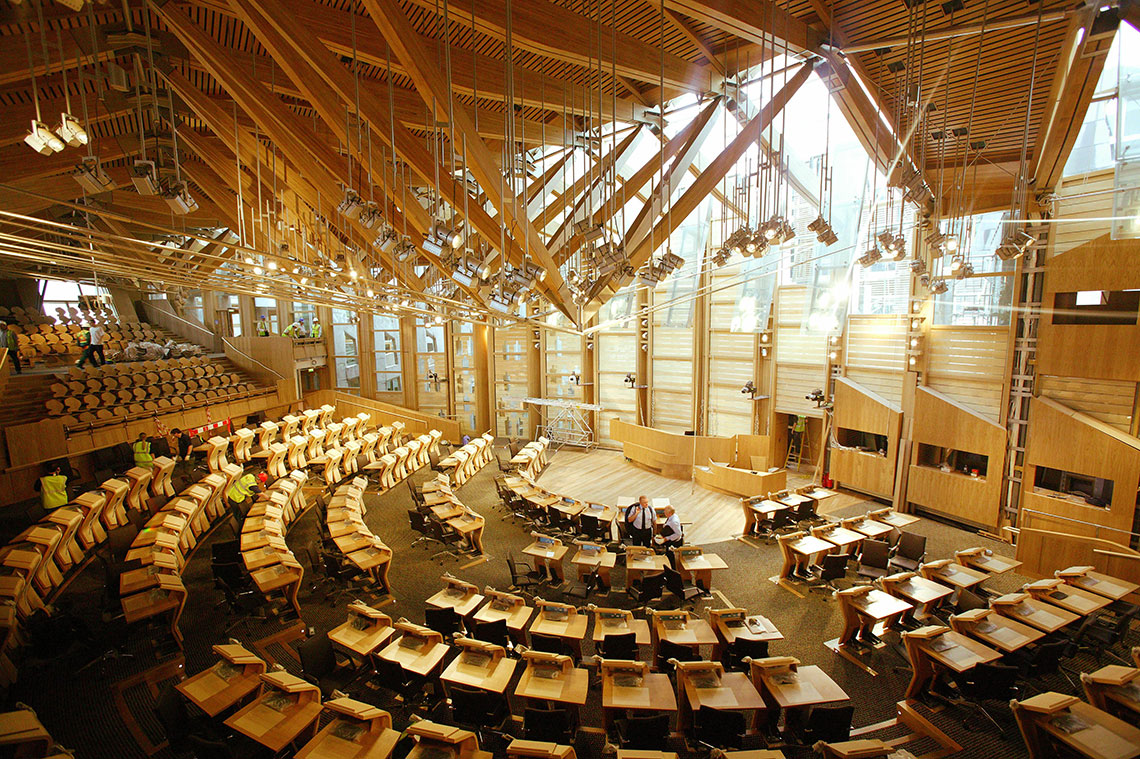
Scottish Parliament Committee Elections
The Scottish Parliament has made some welcome changes to its procedures to increase transparency and accountability but, unfortunately, they do not appear to be making much of a difference.
The first alarm bells rung for me when the Parliamentary Bureau [1] set about deciding from which political party the Convenors would be selected from.
On 3 June 2026, the Parliamentary Bureau met. It agreed a motion to be lodged in Parliament the next day proposing these party allocations.
The motion was taken on 4 June and passed without a vote.
What surprised me and others was the fact that on three Committees (Criminal Justice, Finance and Public Administration and Public Service Reform, both the Convenor and Deputy Convenor are from the governing party – the SNP.
The Minutes of the Bureau tell us nothing about how this decision was reached and so I contacted each member to ask them to explain why they agreed to this.
The allocation of Convenors and Deputy Convenors is done by the d’Hondt method which is the method used to allocate list seats at Scottish Parliamentary elections. Basically, the SNP with 58 seats gets to pick the first Committee it wishes to Convene. Its tally for the next round is divided by two (the number of picks it already has plus one). With a tally of 29 its secures the next pick. On the next round it has 19 which is still more that either Labour or Reform and so gets to pick its third committee. It then has a tally of 14 and so the next picks go to Reform and Labour (each with 17 seats) and the Greens (15 seats). The process continues until all Convenorships have been allocated to a party.
The process is then repeated for Deputy Convenors.
And here is where my question arises.
The SNP picked the three Deputy Convenor slots for the three Committees mentioned above for which it had already been allocated the Convenorship. I do not think this is a good idea and would go so far as to suggest that it should not be allowed regardless of whether it has happened in the past or not.
But here’s the thing – no other member of the Bureau objected.
They could have done so. If all the opposition parties have objected it could have gone to a vote and the SNP would have been defeated. They could have held out and refused to agree the proposed motion. I have spoken to two of the members in person and asked them about this. It turns out that they all sat on their hands.
I have not had a formal reply from any of the Bureau members to my letter of 9 June but on 23 June I received a helpful letter from Jamie Hepburn, the Minister for Parliamentary Business and Veterans. You can read it here. It notes that there have been previous occasions where Convenors and Deputy Convenors have been from the same party and that what has happened this time is not new.
The upshot of all of this is that the Government has two of its MSPs in the Convenor and Deputy Convenor slots for three very important Committees. I do not think this is good for the independence of Committees and their ability to scrutinise the executive.
But there we are.
The next stage on the process was for the election of Committee Convenors from the parties that had been allocated the post. In a welcome new development, Committee Convenors are now elected for the first time.
But apart from one Committee (Standards, Procedures and Public Appointments) where there were two candidates, all of the elections had only one candidate. This did not stop MSPs voting against that candidate. You can see the results in the Official Report of 10 June 2026. (It is also odd that Government Ministers are allowed to vote when they are the ones whose policies and decisions are to be scrutinised.)
What appears to have happened is what always used to happen. Each party decided who their candidates would be most probably by instructions from party whips or business managers and discouraged or forbade rival candidates. The new rules mean that each candidate needs to be seconded by an MSP from a different party. The Parliament does not appear to have published information on the nominators and seconders of candidates. But what happened is probably that each Party’s business manager approached another party and invited them to provide seconders in exchange for seconding their own candidates.
This is a pretty poor state of affairs. MSPS got no choice as to who would be best to Convene important committees and instead left it up to their party bosses to stitch the election up.
We will wait and see whether the Committees live up to the expectations of them to scrutinise the work of the Government independently and on a non partisan basis.
NOTES
[1] The Parliamentary Bureau comprises one MSP from each party with 5 or more members. The current Bureau therefore has representation from all political parties. The Bureau is responsible to proposing the Parliament’s business programme (its schedule of debates etc) and other aspects of parliamentary business. The Government’s Minister for Parliamentary Business proposes the business programme Each Bureau member carries with them the number of votes equal to their party’s number of MSPs. It is thus possible for members to object to proposals for Parliamentary business and votes can be held.
Sounds like a stitch up. Par for the course for Scotland.
They probably shake in their shoes when you appear .
No-one seems to care about this poor wee abused country…not even the SG.
Fancy being FM?
Excellent work by you as always.
Thanks Andy
I was wondering about this. I am not happy about some of the Conveners who have been appointed. As I understand the Convener can chose the agenda and work load for their committee?
A number of MSPs are new and may not be aware of the process and where the power lies.
Could you explain how the committee members are chosen as well?
There is training for new MSPs. Ours is new and is deputy convenor of the Transport Committee, under Willie Rennie.
Some MSPs seem happy to take on multiple committees . Some seem less enthusiastic. It would be interesting to monitor the activity.
A few maybe’s and a probably or two in there .
Quote , ” but here’s the thing – no other member of the bureau objected ” .
If the vast majority of MSPs are happy with the procedures , and that appears to be the case , then is there really much of a concern ?
I am sure there are other issues that need much more serious attention than this particular one .