Hugh MacLeod Owns the Cuillin
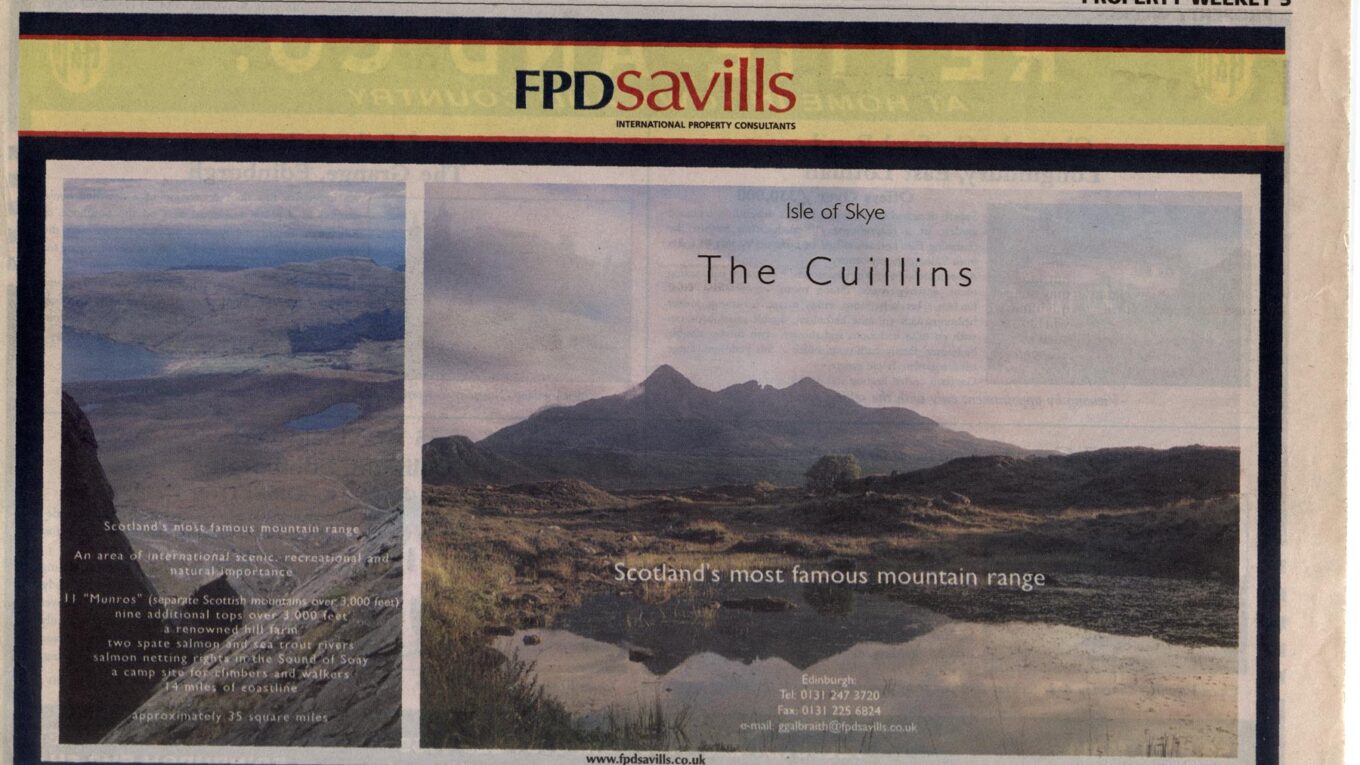
In March 2000, the late John MacLeod announced that he intended to sell An Cuiltheann (the Cuillin). Savills were appointed as the selling agent and advertised the land at offers over £10 million.
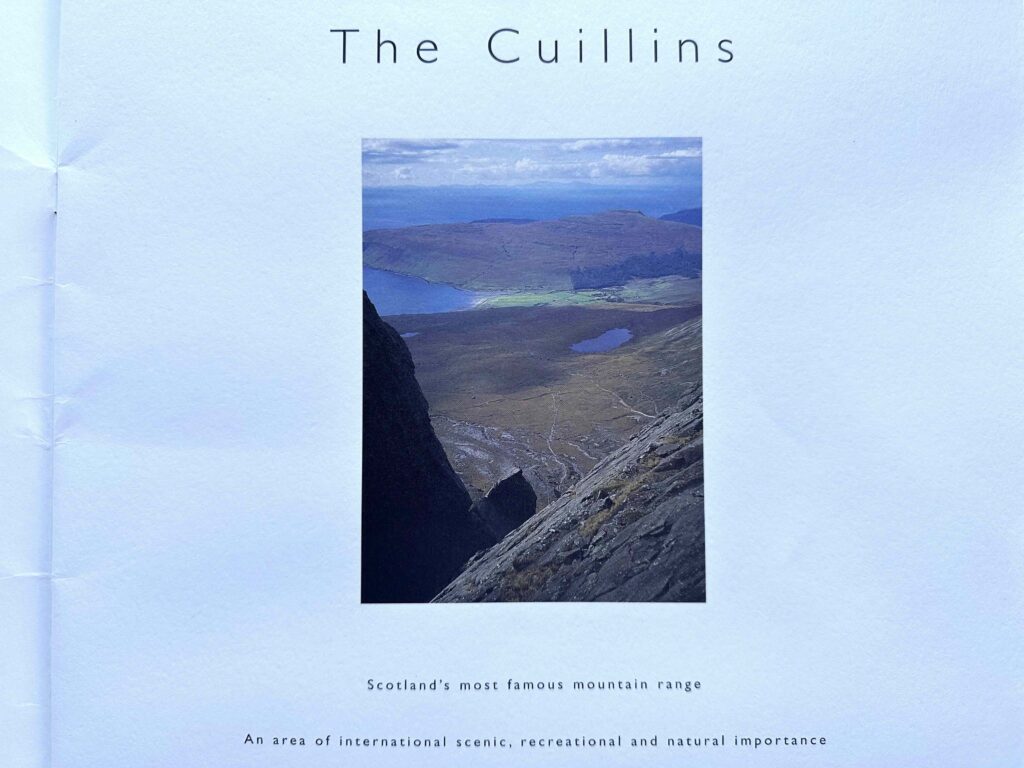
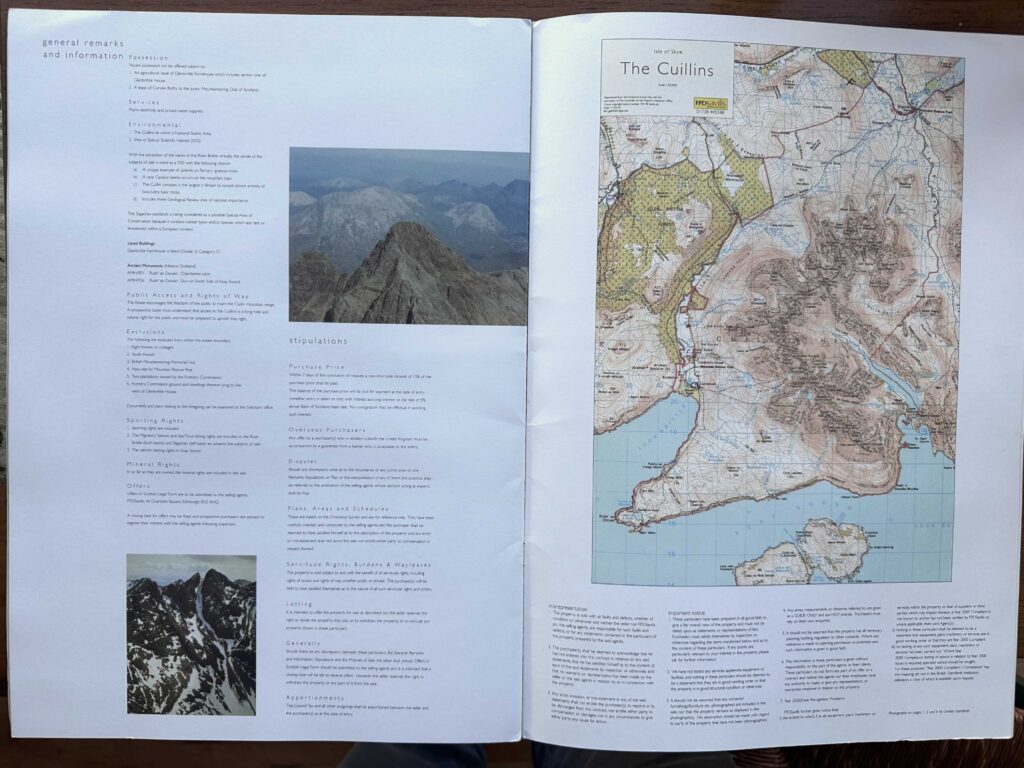
There followed a public outcry. Some questioned how someone could own such mountains. Others railed at the exorbitant price tag.
And some of us wondered whether MacLeod owned the Cuillin in the first place.
MacLeod had been granted land in Bracadale in a Charter of 1611.
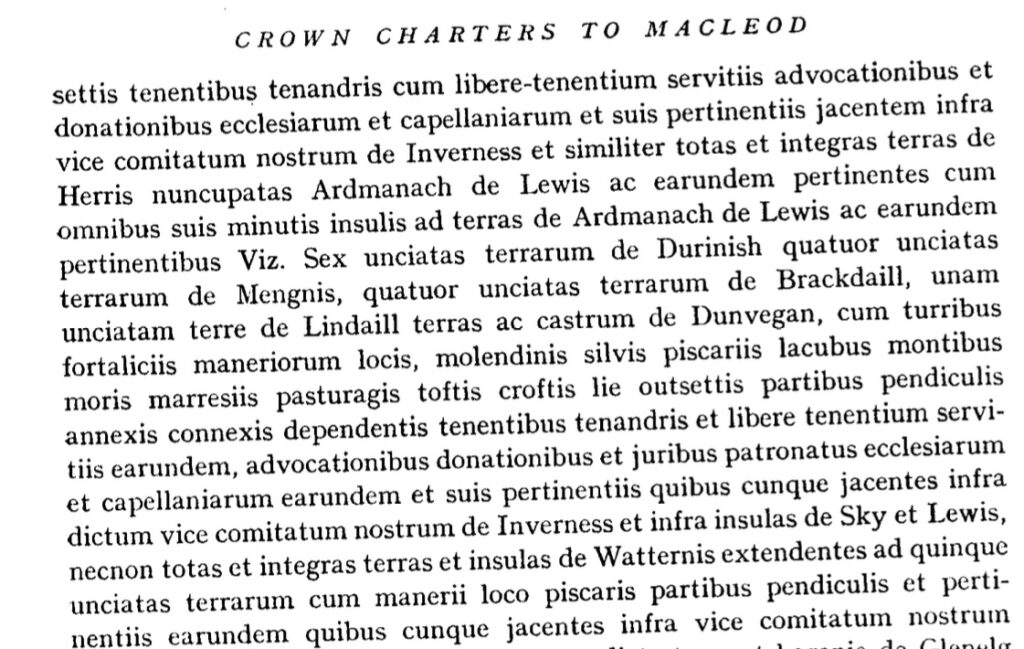
It described the lands as four unciates of land in Bracadale, an old form of land measurement that equated the the extent of land that would yield 4 ounces of silver in rent. Since the rocky wastes of the Cuillin had no economic value to any pastoralists, they were excluded from this Crown grant. An expert in such matters noted that this equated at the time to around 240 acres of arable land – enough to support around 240 cattle. [1]
This was consistent with the observations of Cosmo Innes who, in his Lectures in Scottish Legal Antiquities wrote,
Looking over our country, the land held in common was of vast extent. In truth, the arable – the cultivated land of Scotland, the land early appropriated and held by charter – is a narrow strip on the river bank or beside the sea. The inland, the upland, the moor, the mountain were really not occupied at all for agricultural purposes, or served only to keep the poor and their cattle from starving. They were not thought of when charters were made and lands feudalised. Now as cultivation increased, the tendency in the agricultural mind was to occupy these wide commons, and our lawyers lent themselves to appropriate the poor man’s grazing to the neighbouring baron. They pointed to his charter with its clause of parts and pertinents, with its general clause of mosses and moors – clauses taken from the style book, not with any reference to the territory conveyed in that charter; and although the charter was hundreds of years old, and the lord had never possessed any of the common, when it cam to be divided, the lord got the whole that was allocated to the estate, and the poor cottar none. The poor had no lawyers.
Appropriately, this passage is the origin of the title of my book in which I devote a chapter to the Cuillin sale.
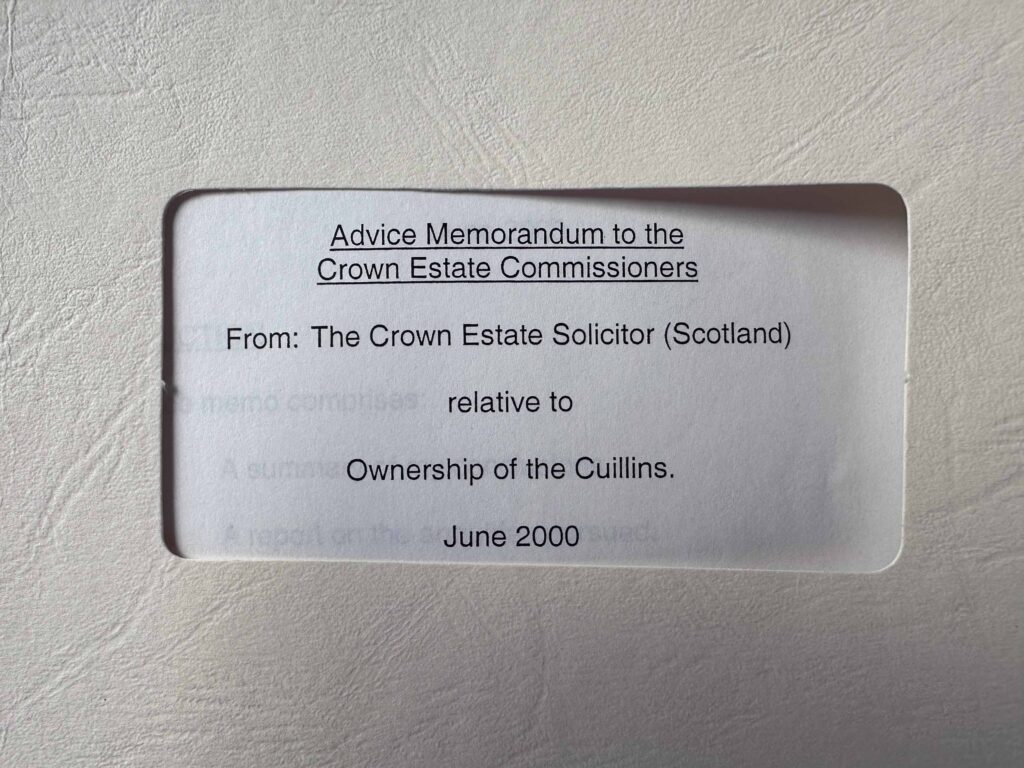
In response to public concern, the Scottish Office invited the Crown Estate Commission to investigate the validity of MacLeod’s title. Alan Menzies, the Crown Estate solicitor in Scotland drafted an advice memorandum in June 2000.
James Drummond Young QC then prepared an Opinion.
Both Menzies and Drummond Young concluded that, although it was unclear what extent of land had been granted to MacLeod in 1611, subsequent deeds conveying lands to successors were capable of including the Cuillin. MacLeod and his predecessors had thus fulfilled the key tests required to claim title through prescriptive possession.
John MacLeod never sold the Cuillin but in 2020, legal agents acting for his son, Hugh MacLeod (who had succeeded his father following his death in 2007) submitted an application for voluntary registration in the Land Register.
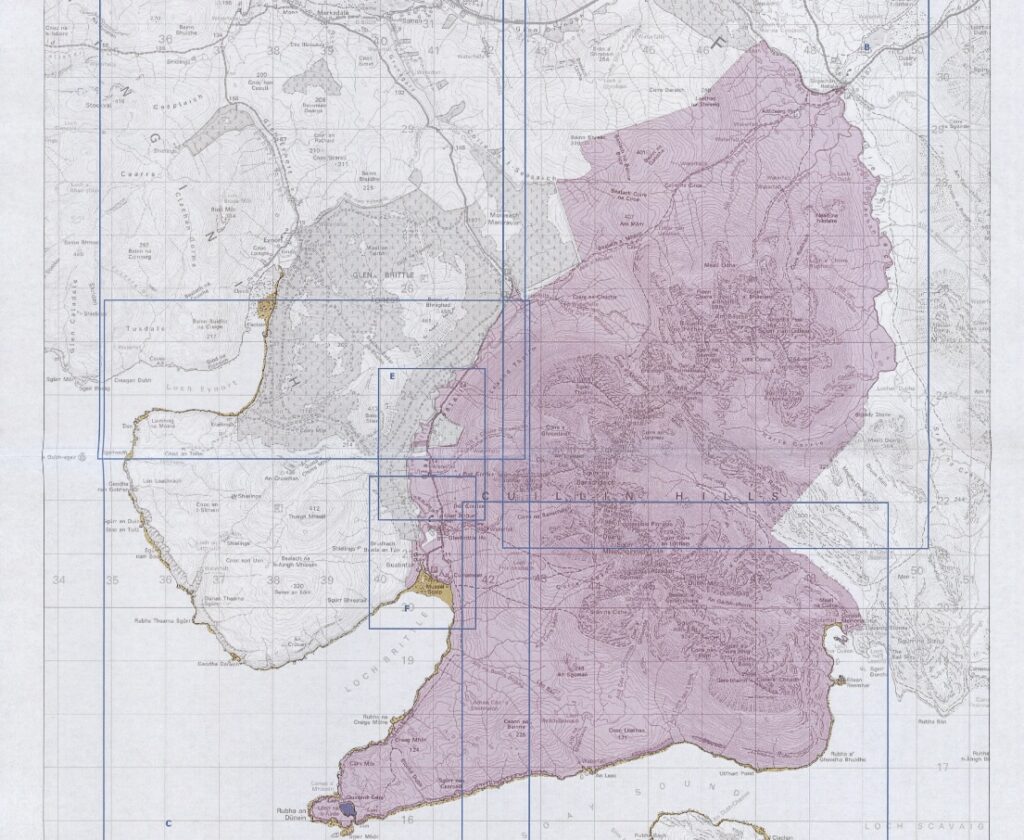
The application contained detailed plans of the land to be registered.
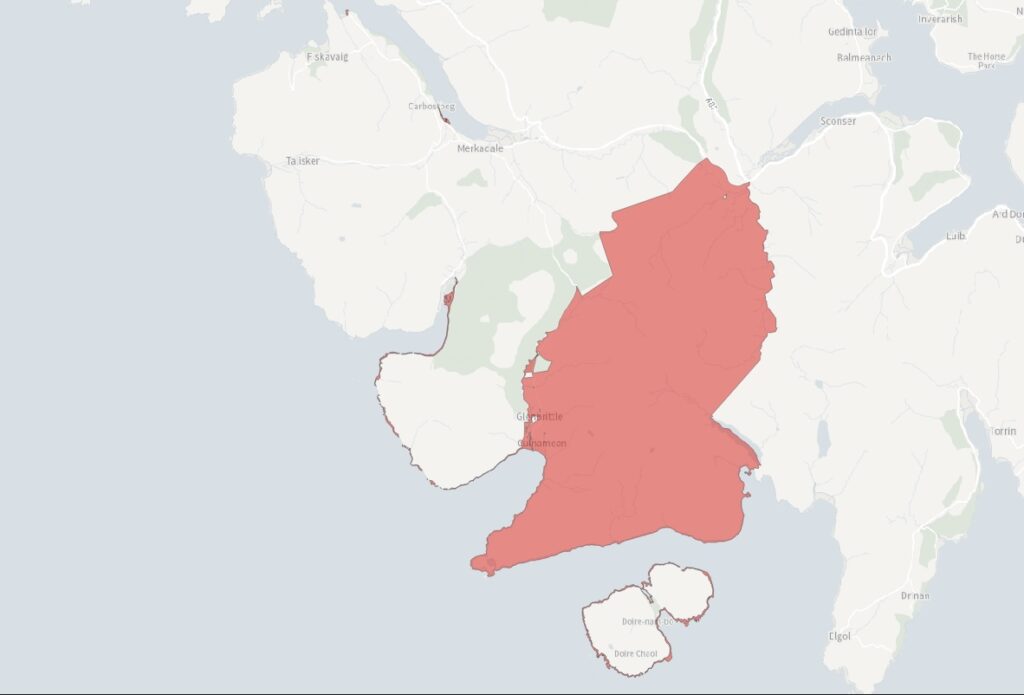
The application has now been processed and the Keeper has decided that Hugh MacLeod has a good title to the Cuillin. She has registered its ownership under title INV54866 with the lands around Dunvegan registered under title INV47843.
Simplified maps are published below and show, in addition to the Cuillin, ownership of extensive foreshore to the west of Glen Brittle, around the island os Soay as well as to the north of Dunvegan.
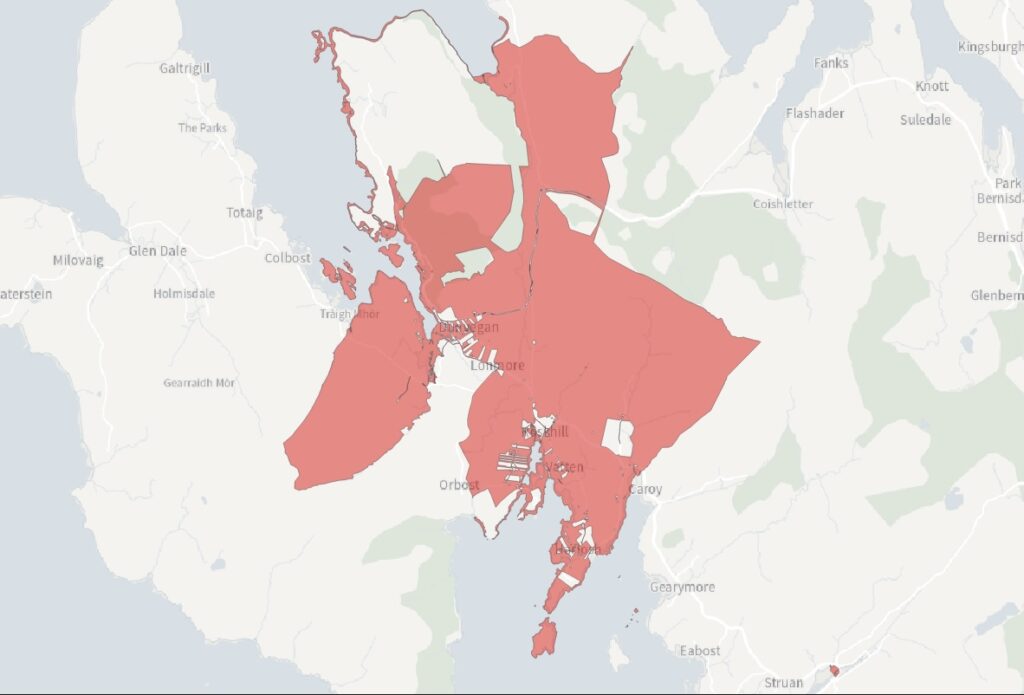
Thus, after much debate and rummaging around in the MacLeod muniments, it can finally be stated that Hugh MacLeod owns the Cuillin.
NOTES
[1] his observations are buried in my boxes of files on the topic and I cannot locate them.
Anybody want to buy my garden.? Price £10,000,0000. And it’s in Scotland where the Scottish government are blind to the fact that our land is being used as an investment opportunity for foreigners ( I include foreign english in this section), royals, aristocrats, business morons, Danish investors, Arab billionaires, celebrities and your average foreign numpty to buy and hide in offshore accounts and then refuse to give details about it. Just as well we have a Land Warrior in the shape of Andy guarding the gate…and the rest of us watching intently….
For OUR Scotland and her weans all crammed into wee spaces.
Thank you Andy
How did the Keeper become convinced that Hugh (and the late John) MacLeod had been in POSSESSION of an entire mountain range? Did he erect fences around it, and then charge for entry? Hardly Is the range covered in grouse butts? Or bothys erected at MacLeod’s expense? Hardly.
The Keeper’s decision is unfathomable, even if the State Guarantee is excluded.
Harvie Paterson
The answer is probably the evidence uncovered by Alan Menzies in the MacLeod muniments. I recall woodcock shotting in Loch Coruisk basin. The tests for possession are linked to the particular nature of the land. It would be interesting to see the legal analysis underpinning the decision to register without exclusion of warranty.
You are correct. There is no exclusion of warranty (State Guarantee). I was amazed to find no exclusion. It may be that there was more than woodcock shooting – there might have been stag hunting/shooting as well. But to conclude there has been continuous possession for at least 10 years of an area of several thousand acres, including the tops of mountains, just stretches credulity.
No-one is ever going to be allowed to see the opinion of Mr. Drummond-Young or the findings of Mr. Menzies. I wonder who Menzies spoke to before concluding his findings
There is a link to Drummon-Young’s Opinion in the blog and I have a hard copy of Alan Menzies’ advice memorandum
Good to know about the hard copy, Can you quote his findings regarding possession? Many others might be interested in it. As for the opinion of the Q.C., thanks for pointing out the link, though as I retired solicitor I might be a bit cheeky and say that at university we were told by the Conveyancing professor that conveyancing (in a wide sense – not restricted to the drafting of deeds, etc) should be left to solicitors.
Am en route to Pyrenees. Will try and remember to do so on return!
Have a good trip. There is no hurry. The mountains will still be there when you get back!
One further point which may be of interest – two mortgages have been granted. In the very unlikely case of repossession by the lending banks they will I assume want to sell the mountains. There has been a precedent here – Gigha ended up owned by a Swiss bank in the 1990s.